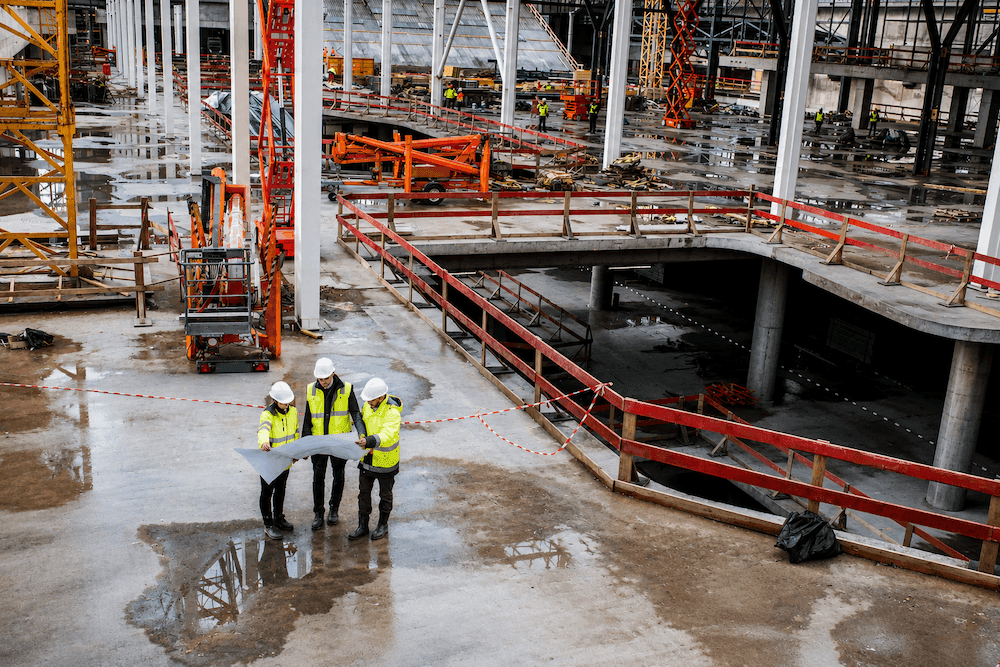
Your best carpenter became a foreperson. Your most experienced concreter is now running a site. MTA builds custom programs for site supervisors, forepersons, project managers and construction team leaders — practical, no-nonsense and built for an industry where every day on site costs money. Nobody trained them to lead the people — just do the work.
Face-to-face at your site · Online · Hybrid · Delivered across Australia · $299 per person
On-SiteAt Your Project
$299Per Person
90Min Modules
On-SiteAt Your Project
$299Per Person
90Min Modules
Certificate Included
90-Min Modules
Delivered Australia-Wide
WHS Compliant Content
What This Page Is About
Overview: MTA Training for Construction.
Construction is one of Australia's largest and most complex industries — and one of the most underinvested when it comes to leadership development. Your site supervisors, forepersons and project managers are navigating enormous pressure every single day: WHS compliance, subie coordination, client expectations, program delivery, team conflict and the ever-present threat of a delay that costs everyone money.
Most of them got there because they were outstanding at the trade. Almost none of them received formal management training before taking on their first direct report. That gap shows up in your incident reports, your HR complaints, your subcontractor relationships and your rework costs.
MTA builds custom training programs for Australian construction businesses — from residential builders and specialist subcontractors to commercial construction firms, civil contractors and infrastructure project teams. Every program starts with a DNA Audit of your specific challenges, your project type and your team structure. Then we build the modules that fix the actual problems — not generic leadership content that's never seen the inside of a site shed.
Available for individuals and groups. Self-paced for individual learners. Coach-led for individuals or groups — delivered face-to-face at your site office, project shed or head office, online or hybrid. We cover all of Australia: Sydney, Melbourne, Brisbane, Perth, Adelaide, Canberra, Darwin, Hobart and regional project sites. We travel. A lot.
Is This For You?
Who Is This For.
MTA's construction training is built for people who manage other people in this industry — at any level of the operation.
Site Supervisors & Forepersons
Project Managers & Contract Managers
Trade Crew Leaders & Leading Hands
Construction & Civil Operations Managers
Newly Promoted Tradies & Site Leads
HR & L&D Teams in Construction Businesses
Not sure if MTA is the right fit for your business? Book a free 15-min chat — we'll ask the right questions and give you a straight answer.
The Real Problem
Construction Pain Points.
These are the management and leadership challenges MTA encounters in constructionbusinesses every week. If any of these feel familiar, you're not alone — and every one of them is fixable.
Leadership Transition · Construction Sites & Projects
The Promoted Tradie
Your best carpenter. Your most reliable concreter. Your go-to bricklayer. Now they're the foreperson — and managing the crew is a completely different skill set to doing the work. They know the job inside out. What they don't know is how to pull someone up without losing the whole team's respect, how to have a performance conversation without it turning into an argument, or how to lead a crew when the project is behind and everyone's under pressure.
MTA Fix →From Peer to Manager + Accountability That Sticks — delivered face-to-face at your site. Gives newly promoted forepersons and site leads the people management tools they should have received before the promotion.
Contractor Management · Multi-Trade Sites
The Subbie Standoff
Your site supervisor knows how to manage their own crew. Managing subcontractors is a different story entirely. Subbies push back on scope. They show up when it suits them. They blame the site manager when the program slips. And because they're not your direct employees, the levers your supervisor usually pulls don't work. The result is a site where accountability is patchwork, the program bleeds, and your supervisor is burning out managing conflict they were never trained to handle.
MTA Fix →Managing Without Authority + Accountability That Sticks — gives supervisors the tools to hold people accountable without relying on direct authority. Critical for managing subcontractors, cross-trade coordination and the reality of a multi-contractor site.
Workplace Health & Safety · Construction Sites
Safety Culture That's Just Paperwork
The SWMS are signed. The toolbox talks happen every Monday. The JSAs are filed. And then someone bypasses a procedure because the program is tight and the foreperson doesn't say anything — because they don't want to look like they're slowing things down. SafeWork NSW, WorkSafe Victoria, WHSQ — they're not interested in your paperwork. They're interested in whether the culture on your site actually keeps people safe. Compliance without culture is just paperwork waiting for an incident.
MTA Fix →WHS for Managers + Building a Safety Culture — two modules that work together. One gives your supervisors their legal obligations in plain English. The other builds the culture where safety conversations actually happen before something goes wrong.
Retention · Skilled Trades & Site Teams
The Tradie Talent Drain
Australia's construction sector is in the middle of a skills shortage that isn't going away soon. Finding good tradies is hard. Keeping them is harder. And the exit interviews — when you bother to run them — say the same thing over and over: people don't leave because of the work; they leave because of who's running the site. A foreperson who doesn't communicate clearly, doesn't recognise good work, or runs the site on fear will cost you more in turnover than a year's worth of training ever would.
MTA Fix →Coaching Your Team + Running Effective 1-on-1s — the two highest-impact modules for supervisor retention. When people feel developed, they stay. When they feel invisible, they leave. These modules fix that dynamic at the supervisor level, where it matters most.
Mental Health & Wellbeing · Construction Sites
The Site Culture Nobody Talks About
Construction has one of the highest rates of suicide of any industry in Australia. Blokes don't talk about it on site. Supervisors don't know how to spot the signs or have the conversation. The 'harden up' culture is still alive and well on plenty of sites — and it's killing people. From December 2025, psychosocial hazards are explicitly listed WHS risks under Australian law. That means your site supervisors' management behaviour is now a compliance matter — not just a culture one.
MTA Fix →Mental Health & Wellbeing at Work + WHS for Managers — two modules that work together. One gives your supervisors the skills to spot the signs and have the check-in conversation without it being awkward. The other ensures their management behaviour meets the WHS obligations now required by law.
Workforce · Diverse & Multi-Trade Crews
When the Brief Doesn't Land
Australian construction sites are among the most culturally diverse workplaces in the country — and that's genuinely a strength. Until a safety instruction doesn't land because the crew leader assumed everyone understood. Or a conflict blows up between two trades because neither supervisor had the communication tools to de-escalate it early. On a construction site, miscommunication doesn't just damage morale — it damages the build.
MTA Fix →Team Communication That Sticks + Managing Diverse Teams — gives supervisors a communication framework that works across languages, cultures and trade backgrounds. Not by teaching them to 'manage diversity' — but by giving them tools that work on site regardless of who's standing in front of them.
What Poor Leadership Actually Costs on Site
57%
Of workers who leave say their direct supervisor was the main reason they walked — Global Workforce Research
$30k+
Average cost of replacing a skilled tradie on an Australian construction project — Industry Workforce Data
#1
Industry for male suicide in Australia — ahead of mining, agriculture and transport — MATES in Construction
What This Training Solves
The Problem This Page Solves.
In construction, the cost of poor frontline management isn't abstract — it lands on your project budget, your insurance premiums and your reputation with the next client. Some sites have a genuine labour shortage, and no amount of training fixes a real capacity problem. But just as often, MTA sees sites with enough people who simply aren't being led well. When the problem is who you have, training isn't the answer. When the problem is how they're being led, it usually is.
A Scenario That'll Feel Familiar — Commercial Builder, Queensland
A mid-tier commercial builder promoted their best site carpenter into a foreperson role on a $12M retail fitout. Within four months, two of his crew had gone to work for a competitor. A SafeWork Queensland site visit had flagged a psychosocial risk concern following a formal complaint. The project manager was spending two hours a day managing crew conflict that should never have reached him. The new foreperson wasn't a bad person. He was an excellent carpenter who'd been given responsibility without the tools to carry it. Nobody sat him down and explained how to lead people under pressure, have a hard conversation without it turning into a fight, or notice when one of his crew wasn't okay. The rework, the turnover, the compliance response and the PM's lost time cost that business more than ten years of MTA training would have.
What Changes After Training
Construction-Specific Training Outcomes.
MTA programs are designed to produce observable changes in behaviour on site — not just awareness. These are the specific, measurable outcomes construction businesses typically see after a well-targeted MTA program.
Fewer site conflicts and HR escalationsSupervisors handle it on site, early — not in your inbox two weeks later as a formal grievance.
Lower tradie turnoverWhen people feel led well, they stay. And they bring their mates. That's how you build a crew that shows up every day.
Stronger safety cultureNear-misses get reported. Procedures don't get bypassed when the program is tight. The culture shifts before the regulator shows up.
Better subcontractor managementSubbies know what's expected, when it's expected, and what happens if it's not delivered. No more guessing.
Supervisors who lead with confidenceNot avoiding conflict. Not waiting to be told. Managing their site proactively — and earning their crew's respect doing it.
Reduced absenteeismWell-led crews show up. Crews with poor supervisors find reasons to call in sick. It's that direct a relationship.
Every MTA module ends with a Monday Morning Action — one specific, named commitment each participant applies before the week is out. On a construction site, that might be the first real accountability conversation a foreperson has ever initiated. That's where the change starts.
Start Here · Built for Construction
Mini Foundations Program: LEADING IN CONSTRUCTION.
Not sure which modules to start with? Leading in Construction bundles the four essential modules every construction leader should work through — chosen for you, so there’s no decision to agonise over. Take it self-paced, or work through all four live with an MTA coach.
Reality → People → Pressure → Culture
The 4 Foundation Modules · 90 Min Each · Certificate Included
The Site RealityIND03·PROG01·MOD01 · Foundation
Managing the CrewIND03·PROG01·MOD02 · Skill-Build
Under PressureIND03·PROG01·MOD03 · Application
The Culture You BuildIND03·PROG01·MOD04 · Integration
Pricing shown is per individual. Individual training is delivered self-paced online, or online with a live coach — face-to-face and hybrid delivery are available for teams only.
Self-Paced · Online · Instant Access
$999+ GST
Save $197 vs buying the modules individually
Immediate access in your account portal. Work through all four modules online, at your own pace — start the minute you enrol.
MTA builds industry-specific programs for teams across every major Australian industry. Every program is customised — your sector, your challenges, your language.
We come to you. MTA delivers face-to-face management training on-site in every state and territory — plus the regional hubs in between. Online and hybrid options keep split shifts and multi-site teams covered.
Real questions about construction training.Straight answers.
Managing a construction site team requires clear daily briefings, firm accountability and a safety culture that doesn't bend when a deadline tightens. The biggest challenge is that most forepersons and site supervisors were promoted because they were excellent tradies — not because they were trained to lead people. MTA's modules are built specifically for this context: practical, no-nonsense and immediately usable on site the next morning.
Construction supervisors need training in WHS leadership, accountability, performance management, subcontractor management, running effective toolbox talks, handling conflict between trades and managing psychosocial hazards on site. MTA builds custom programs around your specific challenges — not generic HR content that's never seen a construction site.
You name the specific behaviour or standard shortfall, describe the impact on the project and crew safety, set a clear expectation and follow through — every time. The mistake most site supervisors make is ignoring underperformance until it becomes a safety incident or a contractual issue. By then the relationship is damaged and the fix is harder. MTA's Accountability That Sticks module is built for exactly this environment — with construction examples throughout.
Under the Work Health and Safety Act 2011 and the Construction Work Code of Practice, construction PCBUs must ensure adequate supervision and training for all workers. Site supervisors have a specific duty of care. From December 2025, psychosocial hazards — including bullying, harassment and poor management behaviours — are explicitly listed WHS risks that must be controlled on site. This makes leadership training a compliance requirement, not just a performance investment. MTA's WHS modules are built around Australian construction obligations specifically.
The research is consistent: 57% of workers leave because of their direct manager. In construction, where experienced tradies are in short supply and replacing them is expensive, the most effective lever you have is improving the quality of your frontline supervision. When forepersons and site leads know how to lead well, people stay on your sites — and refer their mates to you.
Managing subcontractors requires clear scope briefings upfront, defined accountability structures, consistent communication protocols and a site culture where everyone — subbies included — understands the standard. The biggest gap is site supervisors who manage their direct crew well but fall apart when a subbie pushes back. MTA builds the skills to lead across that boundary effectively — without needing HR to back you up every time.
Yes. Face-to-face delivery is available at your site office, project shed or head office — anywhere in Australia. For on-site delivery, a minimum of 4 modules is required, which equals one focused training day. This keeps travel, setup and program disruption to a single visit rather than several. For crews that can't lose a full day, or for project teams spread across multiple sites, we deliver online or hybrid — where the 90-minute module format keeps time away from the build to an absolute minimum. We come to you either way.
In most Australian construction contexts, a foreperson coordinates the hands-on work of a trade crew — often still on the tools themselves. A site supervisor has broader formal responsibility across multiple trades, subcontractors, WHS compliance and client communication. Both roles require leadership training — but the content differs by level. MTA can build separate programs for each tier of your organisation, targeting the specific gaps that show up at each one.
Self-paced individual access starts from $299 per person per module + GST. That's the entry point for a single individual working through a module at their own pace. For group and on-site pricing, contact us for a quote — we'll give you a straight number, not a ballpark. Most construction businesses start with 3–5 modules targeting their highest-priority gaps — usually WHS leadership, accountability and difficult conversations.
Your Next Step
YOUR SITE. YOUR CREW. YOUR PROGRAM.
The build keeps moving whether your forepersons lead well or not — the difference is in what it costs you in turnover, safety incidents, subbie conflict and rework. MTA builds programs around your construction business, not a generic curriculum. Tell us your challenges and we'll map the modules. 15 minutes. No obligation.