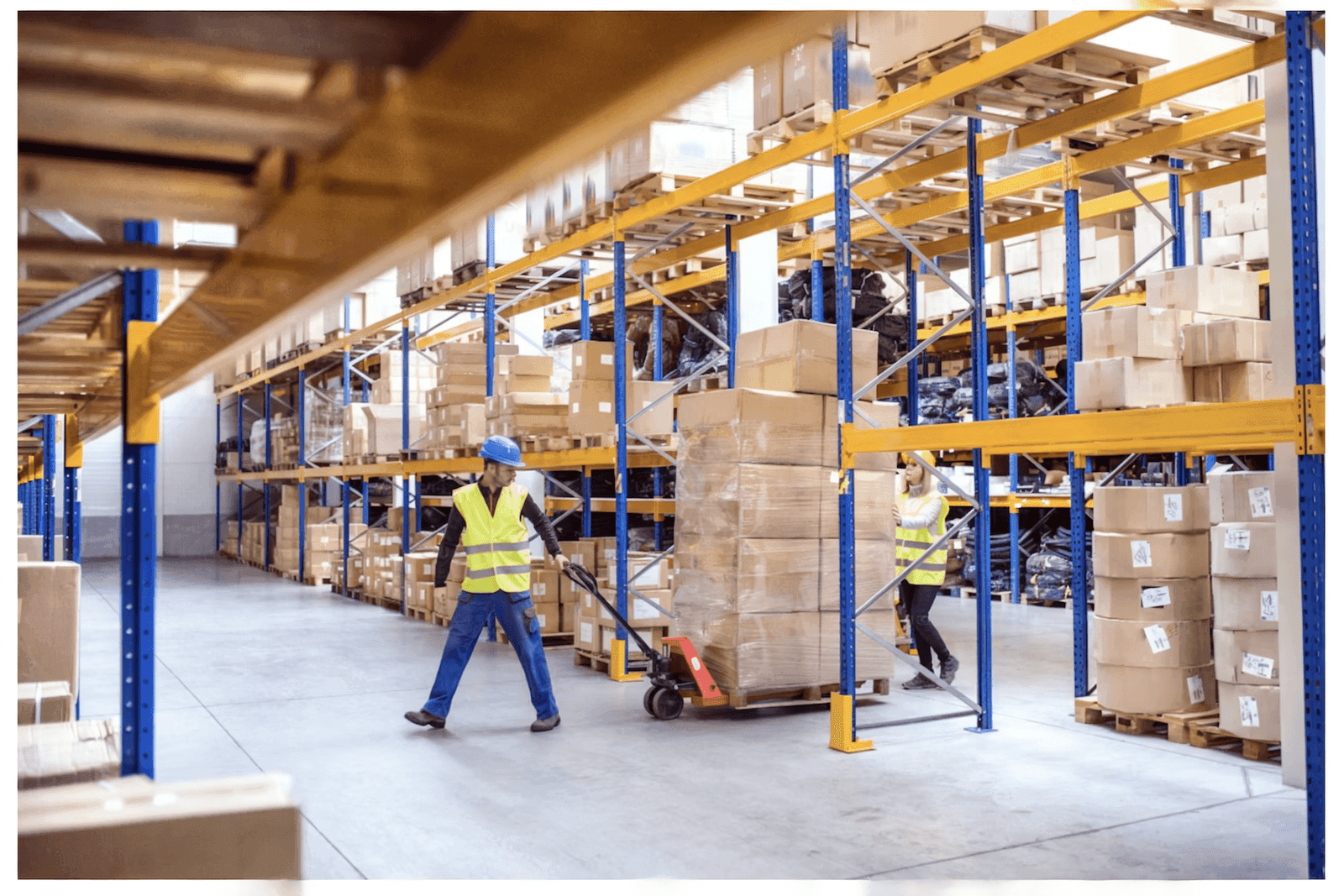
Your supervisors were promoted because they were great operators. Nobody trained them to lead the people around them. MTA builds custom programs for warehouse supervisors, transport team leaders and operations managers — practical, fast and built for your world, not a business school.
Face-to-face at your site · Online · Hybrid · Delivered across Australia · $299 per person
On-SiteDelivery at Your DC
$299Per Person
90Min Modules
On-SiteDelivery at Your DC
$299Per Person
90Min Modules
Certificate Included
90-Min Modules
Delivered Australia-Wide
WHS Compliant Content
What This Page Is About
Overview: MTA Training for Logistics & Supply Chain.
Logistics and supply chain is one of Australia's most operationally demanding industries — and one of the most underserved when it comes to practical leadership development. Your warehouse supervisors, transport team leaders and operations managers are carrying enormous responsibility: safety, throughput, accuracy, compliance and people — often simultaneously, across rotating shifts, with teams under constant pressure to hit targets they didn't set.
Most of them were promoted because they were strong operators. Almost none of them received formal management training before taking on their first direct report. The result shows up in your turnover data, your HR complaints, your safety incidents and your missed KPIs.
MTA builds custom training programs for logistics businesses across Australia — from independent freight companies to national 3PL operations. Every program starts with a DNA Audit of your specific challenges, shift structure and team composition. Then we build the modules that fix the actual problems — not a generic leadership curriculum that doesn't translate to the warehouse floor or the transport depot.
Available for individuals and groups. Self-paced for individual learners. Coach-led for individuals or groups — delivered face-to-face at your DC, depot or head office, online or hybrid. We cover all of Australia: Sydney, Melbourne, Brisbane, Perth, Adelaide, Canberra, Darwin, Hobart and regional logistics hubs. We love to travel.
Is This For You?
Who Is This For.
MTA's logistics & supply chain training is built for people who manage other people in this industry — at any level of the operation.
Warehouse Supervisors
Transport Team Leaders & Team Coordinators
DC Managers & Operations Managers
Supply Chain & Procurement Managers
Newly Promoted Operators & Pickers
HR & L&D Teams in Logistics Businesses
Not sure if MTA is the right fit for your operation? Book a free 15-min chat — we'll ask the right questions and give you a straight answer.
The Real Problem
Logistics & Supply Chain Pain Points.
These are the management and leadership challenges MTA encounters in logistics & supply chainbusinesses every week. If any of these feel familiar, you're not alone — and every one of them is fixable.
Leadership Transition · Warehouses & Distribution Centres
The Promoted Picker
Your best operator, your most reliable team member — now they're the supervisor. They're technically brilliant but managing former peers who know exactly how the job gets done. Nobody gave them a roadmap. Conflict is up. Standards are slipping. The team knows exactly when they're being managed poorly, and they're watching.
MTA Fix →From Peer to Manager + Accountability That Sticks — delivered face-to-face at your site. Gives newly promoted team leaders and supervisors the people management tools they should have received before the promotion.
Communication · Shift-Based Operations
Shift Handover Breakdowns
Critical information doesn't transfer between shifts. Pallets are in the wrong aisle. Dispatch errors happen in the first hour because nobody communicated what was outstanding. The outgoing supervisor thinks they briefed the team. The incoming team thinks they weren't told. The gap between those two perceptions is where KPIs go to die — and safety incidents happen.
MTA Fix →Team Communication That Sticks — with a specific focus on structured shift handover. Supervisors walk away with a repeatable handover format that closes the information gap permanently.
Workplace Health & Safety · Warehouses & Transport Depots
Safety Compliance in Name Only
The toolbox talks happen. The forms get signed. But the culture hasn't shifted. People take shortcuts around forklifts, stack beyond height limits, skip the PPE — because they always have, and nobody's pushed back on it. Then there's an incident. SafeWork arrives. And suddenly everyone wants to know who was responsible for safety culture — and nobody can answer the question.
MTA Fix →WHS for Managers + Building a Safety Culture — two modules that work together. One gives your supervisors their legal obligations in plain English. The other builds the culture where safety conversations actually happen before something goes wrong.
Retention · Warehouse & DC Teams
High Turnover on the Floor
You're losing good people — not to competitors, but to bad supervisors. The exit interviews all say 'management issues.' Replacing a trained operator costs tens of thousands when you factor in recruitment, onboarding and the months it takes to get someone up to speed. The real problem is sitting one level above the person who just resigned. And until that layer gets better, the revolving door keeps spinning.
MTA Fix →Coaching Your Team + Running Effective 1-on-1s — the two highest-impact modules for supervisor retention. When people feel developed, they stay. When they feel invisible, they leave. These modules fix that dynamic at the supervisor level, where it matters most.
Supervisors are expected to hit pick rates, fill rates and dispatch windows. The pressure is real and constant. But many logistics supervisors manage by urgency and volume — not by clear expectations and consistent accountability. When the team misses a target, nobody really knows who is responsible or how to fix it. The supervisor just turns the pressure up. That's not leadership.
MTA Fix →Accountability That Sticks — gives supervisors the framework to translate business targets into individual expectations, follow up consistently and address underperformance before it becomes a pattern. Built for the fast-moving reality of a logistics environment.
Workforce · Diverse & Multilingual Teams
Communication Across Cultures
Australian logistics and warehouse teams are among the most culturally diverse workforces in the country. That's a strength — but only when supervisors know how to communicate clearly across language, cultural and generational differences. Many don't. They default to what works for them and alienate half the floor. The result is misunderstanding, frustration and a team that can't perform to its potential.
MTA Fix →Team Communication That Sticks + Difficult Conversations — gives supervisors a communication framework that works across generations. Not by teaching them to 'manage millennials' — but by giving them tools that work on the floor regardless of who's standing in front of them.
What Poor Leadership Actually Costs
$38k
Average cost to replace a skilled warehouse operator in Australia — AHRI Workforce Data
3x
More likely to have a WHS incident in teams with poor leadership culture — SafeWork Australia
58%
Of logistics workers say their immediate supervisor is their biggest source of workplace stress — AIM Capability Index
What This Training Solves
The Problem This Page Solves.
Some logistics businesses have a capacity problem. Many do — and no amount of management training fixes a genuine headcount shortage. But here's what MTA sees just as often: operations with enough people who aren't performing like it. The workers are there. The skills are there. What's missing is the layer of leadership that turns a group of individuals into a team that performs consistently — safely, accurately and without constant firefighting from the operations manager. When the problem is who you have, training isn't the answer. When the problem is how they're being led, it usually is.
Real Scenario — 3PL Operation, New South Wales
A national 3PL was seeing a WHS incident every six weeks in one of its Sydney DCs. SafeWork had visited twice. The safety manager had updated every procedure and added more toolbox talks. But the problem wasn't the procedures — it was that the warehouse supervisors didn't know how to have a safety conversation that actually changed behaviour. MTA's WHS for Managers and Building a Safety Culture modules, delivered during split-shift handover windows, changed how the supervisors talked about safety on the floor. Zero incidents in the five months that followed.
Real Scenario — Regional Freight Company, Queensland
A regional freight business was losing experienced operators every quarter. Exit interviews pointed to three supervisors. The ops manager had tried team lunches and a pay review. Nothing changed. MTA ran a DNA Audit, built a custom 3-module program targeting accountability, shift handovers and peer-to-manager transition — delivered face-to-face at the depot during a slow week. Six months later, the worst-performing depot's voluntary turnover had dropped by more than half.
What Changes After Training
Logistics & Supply Chain-Specific Training Outcomes.
These are the specific, measurable outcomes MTA programs produce in logistics environments. Not 'improved awareness' — actual behavioural shifts that show up in your throughput data, your safety record and your team's retention.
Shift supervisors run effective handoversCritical information transfers between shifts consistently — reducing first-hour errors, dispatch mistakes and safety incidents.
Accountability conversations happen on the floorLeading hands and supervisors address performance issues before they escalate — calmly, clearly and with a documented outcome.
Safety culture moves beyond complianceThe team understands WHY safety matters around forklifts, racking and manual handling — not just that it's required. Hazard reporting increases. Incidents decrease.
Frontline turnover decreasesPeople stay when they have a supervisor worth working for. The correlation between supervisor quality and retention is documented and measurable.
Newly promoted operators lead with confidenceThe transition from picker or driver to team leader is managed deliberately — not left to trial and error on the warehouse floor.
Delegation actually worksOperations managers stop being the de-facto problem-solver for everything. The supervisors beneath them take ownership and run with it.
Every MTA module ends with a Monday Morning Action — one specific, named commitment each participant applies before the week is out. In a logistics operation, that might be the first structured shift handover a warehouse supervisor has ever run — or the first accountability conversation a team leader has ever initiated. That's where the change starts.
Start Here · Built for Logistics & Supply Chain
Mini Foundations Program: LEADING IN LOGISTICS.
Not sure which modules to start with? Leading in Logistics bundles the four essential modules every logistics & supply chain leader should work through — chosen for you, so there’s no decision to agonise over. Take it self-paced, or work through all four live with an MTA coach.
Reality → People → Pressure → Culture
The 4 Foundation Modules · 90 Min Each · Certificate Included
The Operations RealityIND02·PROG01·MOD01 · Foundation
When the Chain BreaksIND02·PROG01·MOD03 · Application
One Team, Many SitesIND02·PROG01·MOD04 · Integration
Pricing shown is per individual. Individual training is delivered self-paced online, or online with a live coach — face-to-face and hybrid delivery are available for teams only.
Self-Paced · Online · Instant Access
$999+ GST
Save $197 vs buying the modules individually
Immediate access in your account portal. Work through all four modules online, at your own pace — start the minute you enrol.
MTA builds industry-specific programs for teams across every major Australian industry. Every program is customised — your sector, your challenges, your language.
We come to you. MTA delivers face-to-face management training on-site in every state and territory — plus the regional hubs in between. Online and hybrid options keep split shifts and multi-site teams covered.
Real questions about logistics & supply chain training.Straight answers.
Managing a logistics team requires clear expectations, consistent accountability and safety-first communication. The challenge is that most warehouse supervisors and transport team leaders were promoted because they were strong operators — not because they were trained to manage people. That's the gap MTA closes. Our programs are built specifically for this context: practical, fast and immediately applicable on the warehouse floor or at the depot — not in a conference room somewhere.
Supervisors and team leaders in logistics typically need: accountability and performance management skills, safety leadership (not just WHS compliance), shift handover communication, conflict resolution and the ability to have difficult conversations without damaging relationships. MTA builds custom programs around your specific gaps — not a generic list of competencies that doesn't translate to your DC or depot.
Name the specific behaviour. Describe the impact on the team and the operation. Set a clear expectation. Then follow through — every time. The mistake most logistics supervisors make is avoiding the conversation until the behaviour becomes a safety issue or a productivity crisis. By then, the relationship is damaged and the fix is harder. MTA's Accountability That Sticks module is built for exactly this context — with logistics and warehouse examples throughout.
Under the Work Health and Safety Act 2011, logistics employers must provide training to manage identified hazards — including manual handling, forklift safety and psychosocial risks. From December 2025, poor management behaviours are explicitly listed as WHS risks that must be controlled. This means poor leadership in your supervisors isn't just a people problem. It's a compliance risk. MTA's WHS modules are built around Australian logistics and warehousing obligations specifically.
The research is consistent: 57% of employees leave because of their manager, not the company. In logistics, turnover is expensive — trained operators are hard to replace and the cost of recruiting, onboarding and getting someone productive is significant. The single most effective lever is improving frontline manager quality. When your warehouse supervisors and transport team leaders know how to lead well — clearly, fairly and with genuine investment in their team — people stay.
Yes. Face-to-face delivery is available at your site — warehouse, DC, transport depot, anywhere in Australia. For on-site delivery, a minimum of 4 modules is required, which equals one full training day (approximately 6 hours). This keeps travel, setup and operational disruption to a single day rather than multiple visits. For teams that can't afford a full day off the floor, or for shift workers and multi-site operations, we deliver online or hybrid — where the 90-minute module format keeps time away from operations to an absolute minimum. We come to you either way.
It's specific. Every MTA program starts with a DNA Audit of your business — your industry, your shift structure, your actual challenges. Logistics scenarios, real warehouse and transport depot examples and Australian compliance requirements are built into the content. It's not American business-school content repackaged for Australia. It's built here, for here, with your industry's realities at the centre of it.
In most logistics operations, a team leader coordinates pick-and-pack, loading or transport runs within a shift — often while also doing the work themselves. A supervisor has formal management responsibility: performance management, WHS obligations, reporting to the operations or DC manager. Both roles require leadership training — but the content and depth differ. MTA can build separate programs for each level of your organisation, targeting the specific gaps that show up at each tier.
Self-paced individual access starts from $299 per person per module + GST. That's the entry point for a single individual working through a module at their own pace. For group pricing, contact us for a quote — we'll give you a straight number, not a ballpark. Most logistics businesses find the group investment delivers a strong ROI within 90 days when measured against reduced turnover and improved safety performance.
Your Next Step
YOUR DC. YOUR TEAM. YOUR PROGRAM.
MTA builds training programs around your logistics operation — not a generic curriculum. Tell us your challenges and we'll map the modules. 15 minutes. No obligation.